In Guadalajara, Catholic Universities Reaffirm Their Global Leadership
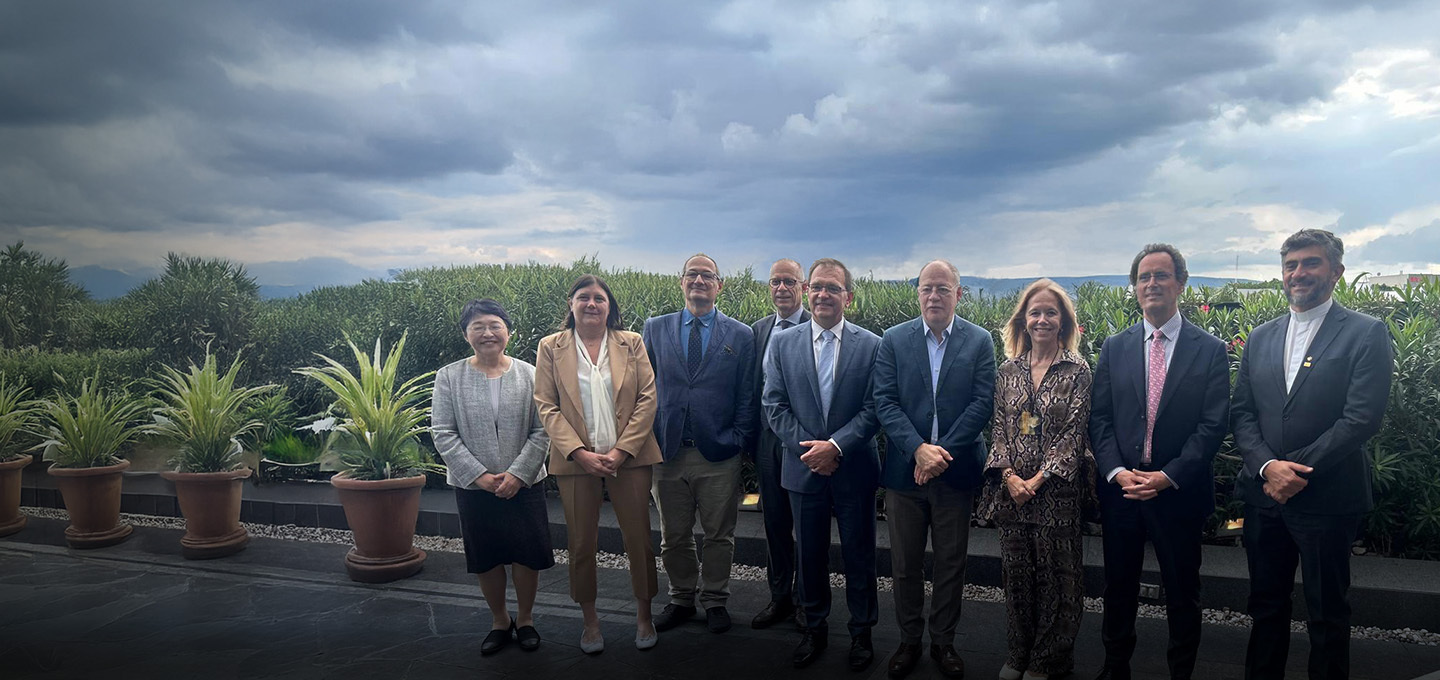
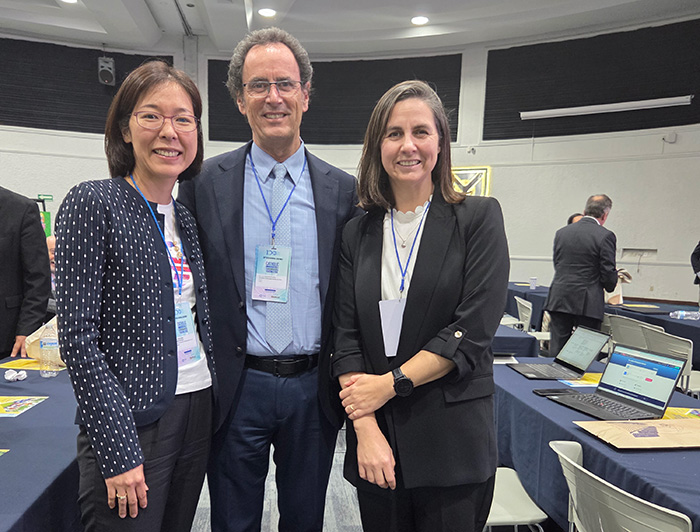
UC Chile President Juan Carlos de la Llera and Vice President for International Affairs Maria Montt are currently in Guadalajara, Mexico, participating in two gatherings of the world’s leading federations of Catholic universities to define strategies of academic cooperation and the role of Catholic universities in response to global challenges.
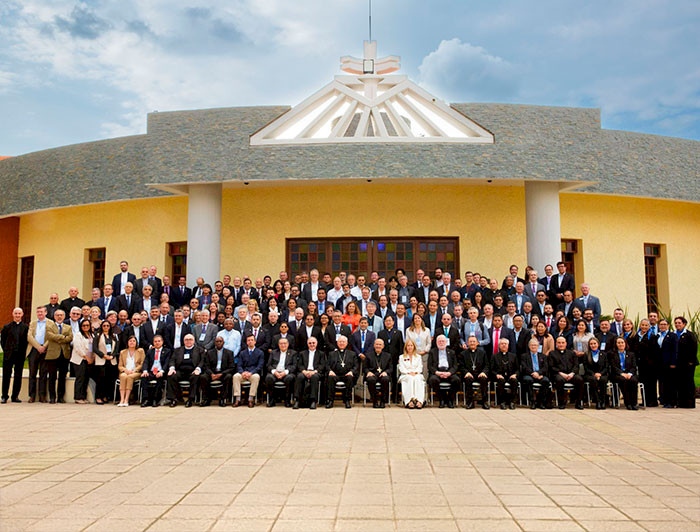
photo_camera More than 160 university authorities are participating in the general assembly of the International Federation of Catholic Universities (IFCU).
Guadalajara, with its colonial architecture and its rich traditional culture, is now the gathering place for the world’s leading federations of Catholic universities. UC Chile, represented by President Juan Carlos de la Llera and Vice President for International Affairs Maria Montt, is actively participating in the general assemblies of the Strategic Alliance of Catholic Research Universities (SACRU) and the International Federation of Catholic Universities (IFCU), reaffirming its leadership in international higher education with Catholic identity.
Both gatherings, held consecutively, bring together authorities from Catholic universities from every continent. The goal is to strengthen global academic collaboration and to plan a united response, rooted in Catholic identity, to contemporary challenges.
“From Guadalajara, UC Chile reaffirms its unwavering commitment to academic cooperation between Catholic universities, the exercise of intellectual freedom, and the public role of universities in times of social and cultural transformation. Catholic higher education is a beacon of hope, a passionate community that incessantly seeks the truth, as well as an agent of transformation amid the great global challenges of our time,” states President Juan Carlos de la Llera.
SACRU: New leadership and global outlook
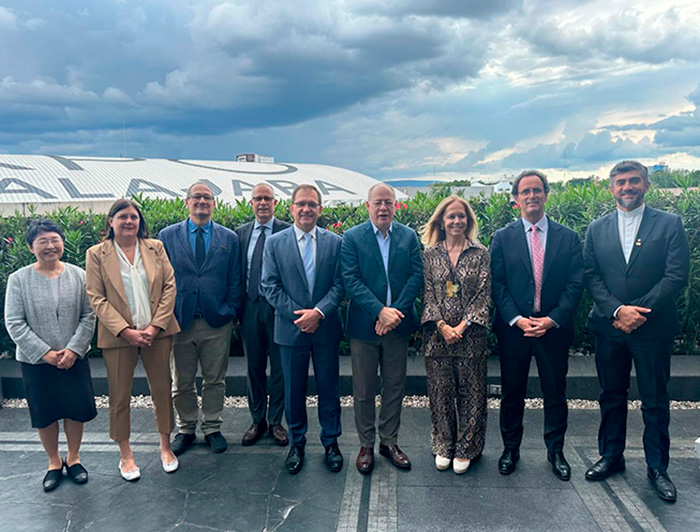
The Strategic Alliance of Catholic Research Universities, SACRU, is an international network comprising eight universities with global presence: Boston College (United States of America), Pontifícia Universidade Católica do Rio de Janeiro (Brazil), Universitat Ramon Llull (Spain), Universidade Católica Portuguesa (Portugal), Università Cattolica del Sacro Cuore (Italy), Sophia University (Japan), Australian Catholic University (Australia), and Pontificia Universidad Católica de Chile.
SACRU’s purpose is to promote academic collaboration of excellence that transcends borders, with a focus on research for the common good, the strengthening of the link between faith and reason in the digital era, global education, digital transformation, interdisciplinarity, and the transfer of knowledge and technology.
SACRU has made some important strategic decisions during its assembly. Isabel Capeloa Gil, President of Universidade Católica Portuguesa (Portugal) has been elected as new president, and Miki Matsuura, President of Sophia University (Japan) has been elected as vice president. Additionally, Pontificia Universidad Javeriana (Colombia) was formally incorporated, thus widening the Latin America’s presence in the network.
Among the most notable advances have been the promotion of the Research Mobility Fund, which supports the mobility of doctoral students and young researchers, and the planning of the next SACRU Summer School, scheduled for October 2025 in Rome.
Maria Montt, UC Chile Vice President for International Affairs, stated: “in a world marked by challenges, Catholic universities seek to offer ethical, collaborative, and transformative responses. Networks like these allow us to deepen our shared reflection on our commitment to the common good, from a global perspective and with Catholic identity.”
UC Chile’s participation in SACRU
Our university has been part of the SACRU network since 2019, participating at three levels: the Governing Board, composed of the presidents; the Executive Committee (ExCo), composed of the vice presidents for Research and International Affairs; and the Working Groups (WG), composed of academics appointed by each institution, who collaborate on joint projects under the leadership of a Chair.
In June of this year, prior to the gathering in Guadalajara, the Office of the Vice President for International Affairs held an internal meeting with UC Chile representatives from each working group, with the purpose of evaluating and strategically planning UC Chile’s participation. This meeting made it possible to systematize progress, identify challenges, and define future courses of action.
The work groups addressed various topics: vulnerability and health care; Catholic identity and Laudato si’; family life; artificial intelligence, agency, and the human person; the best science to feed the planet; gender equality; and rethinking the internationalization of higher education.
IFCU: A century of life and future prospects
The International Federation of Catholic Universities (IFCU) is a global association composed of more than 240 Catholic universities, established by Decree of the Holy See in 1948 and officially recognized by Pope Pius XII in 1949 through the creation of the Foederatio Universitatum Catholicarum. Its origins date back to a collaboration between universities in the Netherlands and Poland, with the purpose of strengthening Catholic education within contexts of crisis in the post war period. Currently, it is affiliated with the Vatican’s Dicastery for Culture and Education and its headquarters are in Paris, opposite the Service Catholique, where its General Secretariat operates.
The IFCU operates along four strategic axes: scientific research, foresight, academic training, and service-learning methodology. These pillars guide its activities, which include conferences, publications, policy briefs, and representation in international organizations such as UNESCO, the European Union, COMECE, and the Vatican.
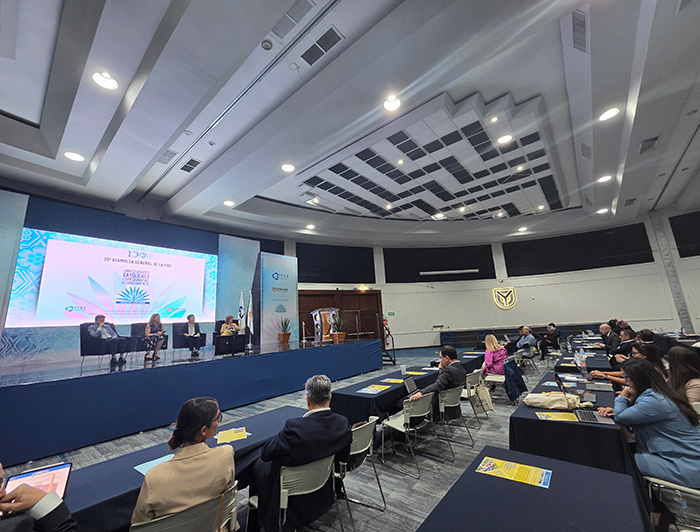
At this meeting in Guadalajara, the General Assembly is commemorating the end of the federation’s centenary (1924-2024) and planning a new stage of joint action. More than 160 university authorities have come together for this meeting to address academic diplomacy, the social impact of Catholic universities, Pope Francis’ call for the Global Compact on Education, and academic freedom.
The opening conference was attended by Cardinal José Tolentino de Mendonça, prefect of the Dicastery for Culture and Education of the Holy See and featured as its keynote speaker former Chilean president Michelle Bachelet, who reflected on the role of universities in building peace and social justice.
As Vice President Maria Montt concludes, “the IFCU is proof that Catholic universities are part of the universal reflection on dialogue between disciplines, cultures, and beliefs: it brings together universities from all over the world. In times of fragmentation, these networks put knowledge and collaboration at the service of positive impact and common good.”


